
One Workshop, 17 Machines, 5 Processes: What China's Supply Chain Actually Looks Like
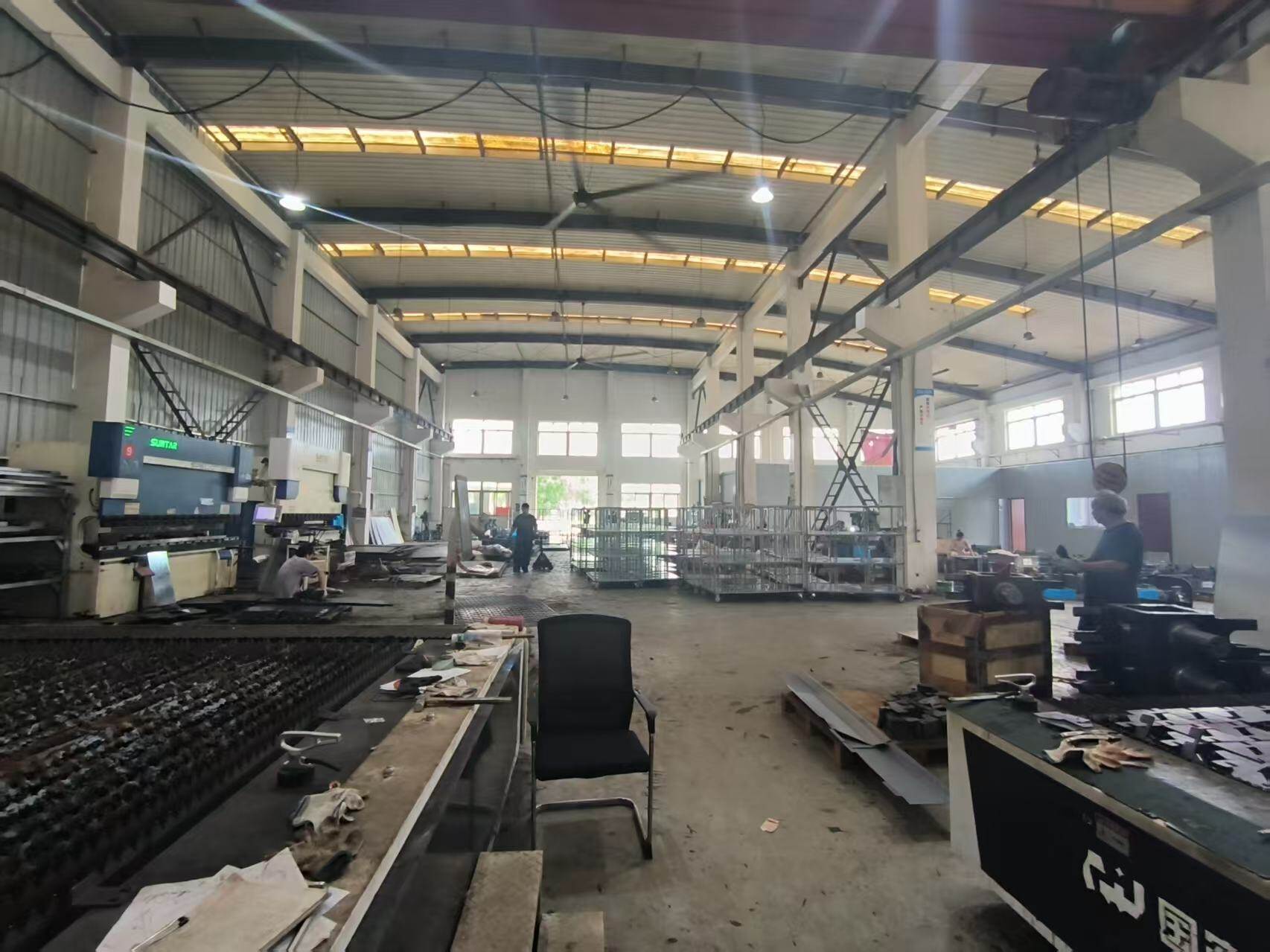
I walked into a small workshop in Suzhou this week. No signboards. No reception desk. Just the hum of machines and the smell of cutting fluid.
I spent an hour walking the shop floor, counting equipment. Here's what I found in a single, unremarkable industrial unit:
Sheet metal: 2 laser cutters, 2 press brakes. They cut flat sheets and bend them into enclosures, brackets, frames.
High-speed drilling and tapping: 5 T600 drill-tap centers in a row. Fast, precise, built for volume.
CNC turning: 2 lathes. Shafts, bushings, cylindrical parts — the kind of components that go into every rotating machine on earth.
Vertical machining: 4 VMCs, from compact 855s to a heavy 1890. They mill complex housings, fixtures, and structural parts.
Precision grinding: 1 surface grinder, 1 cylindrical grinder. For when a part needs to be flat or round within microns.
Seventeen machines. Five distinct manufacturing processes. One workshop.
This is not a mega-factory. It is not "Industry 4.0." It is not chasing certifications or building a brand. And yet — this single workshop can fabricate, drill, turn, mill, and grind. That covers the vast majority of metal parts that any industrial buyer would ever need.
Now multiply this by a thousand.
Across the Yangtze River Delta alone — Suzhou, Wuxi, Changzhou, Kunshan, Ningbo, and dozens of smaller industrial towns — there are thousands of workshops like this. Some specialize in tiny medical screws. Some only do large steel weldments. Some focus on aluminum enclosures. Some chase ultra-precision tolerances. Most are somewhere in the middle, quietly producing parts for machines you use every day without knowing it.
This is the real face of China's manufacturing supply chain. Not the glossy trade show booths. Not the ISO-certified corporate presentations. It is a sprawling, dense, deeply interconnected network of small, versatile workshops. Each one unremarkable on its own. Together, they form the most complete manufacturing ecosystem on the planet.
The scale of it is hard to grasp until you see it.
The Pearl River Delta has its own version — Shenzhen, Dongguan, Foshan — more electronics-focused, faster turnaround, optimized for consumer products and rapid prototyping.
The Yangtze River Delta is heavier, more industrial. Automotive. Medical. Aerospace. Semiconductor equipment. High-mix, high-complexity, often in smaller batches.
Different regions. Different strengths. Same underlying logic: density creates capability.
When an overseas buyer asks me, "Can you find a factory that does X, Y, and Z — all within a 50-kilometer radius?" the answer in the Yangtze River Delta is almost always yes.
Not because there's one perfect factory that does everything. But because there are twenty workshops within an hour's drive, each doing one thing extremely well. My job is to know which ones they are.
This is what I do. I don't sit in an office and search Alibaba. I walk into workshops. I talk to the bosses. I count the machines. I watch the parts coming off the line. I build a mental map of who can do what, who's reliable, and who's not.
When a client sends me a drawing, I don't guess. I know exactly which workshop should get that order — and why.
I'll keep visiting. I'll keep counting. And I'll keep sharing what I find.
If you're sourcing from China and want someone who actually knows what's behind those factory doors — let's talk.
📞 WhatsApp: +86 18112360404
📧 Email: contact@mfgprohub.com
🌐 Website: https://www.mfgprohub.com