
Two Weeks Deep in Suzhou's Manufacturing Heartland: Reflections on Supply Chains, Trust, and China's Manufacturing Upgrade
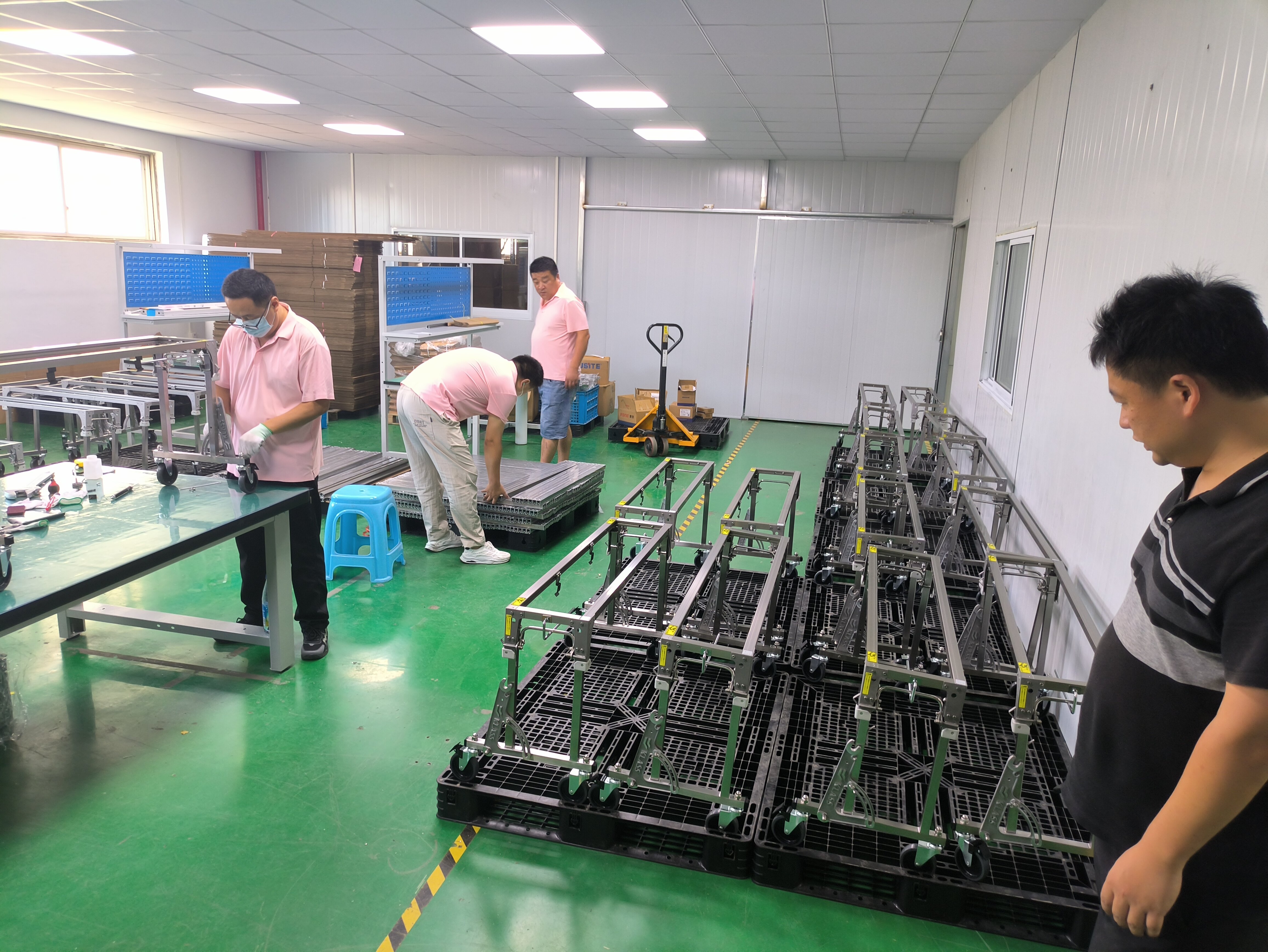
Over the past two weeks, the ProMfg Hub team has been deep in Suzhou's manufacturing heartland, visiting three to four machining facilities of different scales—from precision workshops with a dozen workers to comprehensive plants with hundreds of employees. We talked face-to-face with factory owners and veteran machinists, and learned a tremendous amount.
I was especially fortunate to meet a factory owner surnamed Hu—same as me. With over twenty years in the industry, he owns his own factory and knows owners of countless factories throughout Suzhou. He took me from shop to shop, explaining machine after machine, and we discussed everything from machining processes to industry trends, from domestic price wars to shifts in foreign trade orders.
We Agree: The Value of Chinese Manufacturing Isn't Just "Cheap"
We share one consensus: The direction of global development is the same—everyone wants better products, lower costs, and more stable supply.
Why did China become the world's factory? Not because we have more people, and not because we're cheaper. It's because we've built out the entire supply chain—from raw materials to finished goods, from components to complete machines. Almost anything you want, you can find in China. This isn't about "competition"—it's about reducing manufacturing costs for society as a whole, so everyone can afford good products.
And now, we're moving from "Made in China" to "Created in China"—this isn't just a slogan. It's about raising the quality level of the entire industry chain. In the past we competed on price; now we compete on quality, technology, and service.
This is an inevitable trend, and it's a good thing.
A Question That Always Puzzled Me: Why Are Good Suppliers Always Scarce?
One question has always intrigued me: With so many factories in China, why are procurement teams always searching for suppliers? Why does it always feel like demand exceeds supply?
Logically, this should be a buyer's market. But the reality is that every procurement professional complains about "not finding reliable suppliers," and every factory is short on orders.
Both sides are anxious. Both sides lack security.
Why?
Factory Owner Hu said something that really hit home: "What's scarce isn't orders—it's consistently stable orders. What's scarce isn't factories—it's factories that always do good work."
When you think about it, that's exactly right.
Many factories deliver perfect prototypes, but cut corners on mass production.
Many buyers give you one order, then immediately find someone cheaper the next time.
Both sides play short-term games. Both sides are on guard against each other. The result is declining quality, falling prices, and nobody making real money.
An Even More Interesting Phenomenon: Factories Become "Middlemen" When They Make Money
I've also observed another phenomenon: Many factories do great work at first, but once they get more orders and make money, they start outsourcing and become "middlemen" themselves.
You might say these factory owners are just greedy.
But Factory Owner Hu told me this isn't a people problem—it's an industry structure problem.
Factory capacity is fixed, but orders fluctuate. In peak season you can't keep up; in slow season you have nothing to do. If you blindly expand capacity—buy equipment, hire workers, rent more space—once orders decline, fixed costs can sink you.
So smart factory owners choose to keep core capacity in-house and outsource the rest.
But here's the problem: How do you guarantee outsourced quality?
The answer is: It's very hard.
Because you know nothing about the factory you're outsourcing to—its equipment, its workers, its management. And since the price has already been marked down once, that factory can only cut corners on materials, processes, and labor hours.
The result: The client pays first-tier supplier prices but gets third-tier factory quality, with profits eaten away at every layer.
That's Why I Started ProMfg Hub: To Be a "Trusted Intermediary"
Seeing these problems firsthand has only reinforced my belief that what we're building has real value.
Many people call me a "middleman," but I don't think that's right.
Traditional middlemen make money from information asymmetry—the client doesn't know where the factory is, I do, so I mark up the price.
What I want to make money from is service and management—the client doesn't need to fly to China, audit factories, follow production, or inspect goods. I take care of everything for them, and they pay me a service fee.
What's my role?
For the client, I'm their eyes and hands in China—I help them find truly reliable factories, review drawings and identify risks, follow production, perform inspections, and coordinate delivery.
The client doesn't have to worry about anything on the China side. They just receive qualified parts.
For the factory, I'm the one who brings stable orders—I don't nickel-and-dime them on price. I give them fair pricing and consistent orders, so they can focus on quality and capacity expansion.
The buyer is my boss, and my responsibility is to make sure the buyer gets the price and quality they deserve. The supplier is my partner, and I make sure the supplier gets the cost and profit they deserve.
Only then do we have a virtuous cycle.
Preview: Next Stop—Cleanroom-Grade Precision Manufacturing Facilities
These two weeks of factory visits have deepened my understanding of standard precision machining. But our ambitions go further.
Next, we will conduct in-depth audits of high-end manufacturing facilities with cleanroom processing capabilities.
Why cleanroom factories?
Because they represent the next stage of Chinese manufacturing:
Standard machining competes on price and delivery time;
Cleanroom-grade precision machining competes on technology, management, and reliability;
Clients in semiconductors, medical devices, and high-end industrial sectors don't need "cheap"—they need "absolute reliability."
What will we be looking at?
Actual operation of Class 1000/10000 clean workshops
Machining processes for high-end components like vacuum chambers
Full-process cleanliness control from machining to cleaning, assembly, and packaging
Advanced quality control methods like helium leak testing and cleanliness verification
This is the first installment of ProMfg Hub's factory audit series—there's more to come.
We'll visit facility after facility, verify one by one, and introduce truly reliable Chinese factories to clients around the world who need them.
Because we believe—a good supply chain should be win-win-win: clients get certainty, factories get stable orders, and we get a fair return for our services.
Learn more about ProMfg Hub's precision manufacturing and cleanroom engineering services at: www.mfgprohub.com